IJERPH | Free Full-Text | An Educational Game to Teach Children about Air Quality Using Augmented Reality and Tangible Interaction with Sensors
Feature Papers represent the most advanced research with significant potential for high impact in the field. Feature
Papers are submitted upon individual invitation or recommendation by the scientific editors and undergo peer review
prior to publication.
The Feature Paper can be either an original research article, a substantial novel research study that often involves
several techniques or approaches, or a comprehensive review paper with concise and precise updates on the latest
progress in the field that systematically reviews the most exciting advances in scientific literature. This type of
paper provides an outlook on future directions of research or possible applications.
The World Health Organization (WHO) defines air pollution as the “contamination of the indoor or outdoor environment by any chemical, physical or biological agent that modifies the natural characteristics of the atmosphere” [
1]. These compounds affect the air we breathe and are associated with millions of premature deaths and the cases of diseases such as cancer and obstructive pulmonary disease every year [
1], as well as increasing infant mortality rates [
2]. To achieve both economic development and emission reduction, prioritizing ecological conservation and boosting green development is key [
3].
If we can make children more aware of air pollution and its health impacts, we may be able to promote healthier and environmentally protective behaviors for these children. In fact, the influence of air pollution on public health diminishes as the education level increases [
2]. Raising children’s awareness is particularly advantageous in the first years of school activity, as investing in learning at a younger age is known to bring positive effects in later life [
5]. Awareness can be raised with traditional learning methods, such as formal classes, books, and documentaries. On the other hand, new interactive digital technologies offer new opportunities for active and customized learning activities towards raising the motivation for learning. It is important to continually innovate in the way teaching methods and tools are created and that they include differentiating factors that induce a surprise factor and help make the experience memorable, especially for primary school children [
6]. Investing in quality education during childhood makes children less likely to fail grades and reduces the chances of inclusive and special education needs. Moreover, children are more likely to successfully complete secondary education and be part of the professional market with above-average wages [
5].
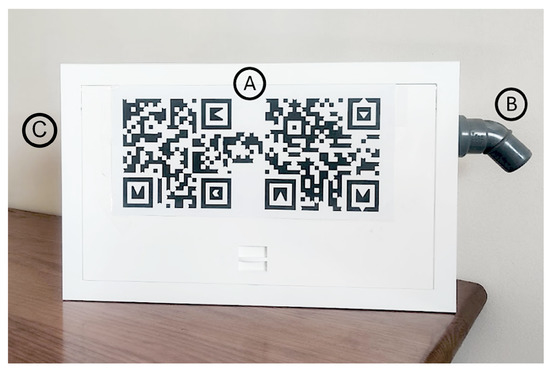
In this article, we present an AR-based educational game that aims to provide an interactive learning experience about indoor air quality for elementary school children, to be played in pairs, in the classroom. The goal is to teach children how everyday objects contribute to households’ air quality. To meet this goal, children are asked to present physical objects to a physical sensor node capable of monitoring the air quality. In return, children are able to see the physical sensor node augmented with virtual representations of the object’s emanated air pollutants measured by the sensor node, rendering visible the invisible. The game was implemented in Unity/Vuforia and interacts with a sensor node developed in the ExpoLIS project [
8].
The game was evaluated with a Wizard of Oz experiment with a sample of 27 children aged between 7 and 11 years. Herein, the air quality measurements were covertly generated in real-time by a human being instead of measured by the sensor node. This option reduces the variance in user testing resulting from the natural stochastic nature of both air diffusion and sensing. The experiments were designed to test four research hypotheses: H1—AR games are able to teach children about the causes of indoor air pollution; H2—AR games are able to teach children about the mechanisms available to clear indoor air pollution; H3—AR games provide a satisfying and emotionally stimulating air pollution learning experience, with high replay value; and H4—AR games benefit from allowing the child to interact with real pollution sources instead of card-based representations. The obtained results confirm the four research hypotheses, showing that the proposed AR-based learning game, in addition to improving children’s knowledge about indoor air pollution, is also perceived by them as easy to use and a useful learning tool that they would like to continue using, even in other educational contexts.
This article is organized as follows.
Section 2 presents a literature survey of related work. Then, in
Section 3, the developed AR-based game is described alongside its key implementation details.
Section 4 presents the experimental setup and results. Finally,
Section 5 draws conclusions and provides future work directions.
The use of games in the educational context is an active research topic with especially positive results in younger age groups [
9]. Educational games, a sub-genre of serious games, show promise in knowledge transmission as well as students’ commitment, motivation, and capacity to retain the acquired knowledge [
10]. Combining teaching strategies with game design may guide learners through complex tasks and new concepts in a relaxed and pleasant way. Adequate game-based learning should enable autonomous learning at the user’s own pace and boost one’s self-motivation [
11].
Nevertheless, competition encourages personal development and improvement. However, the inseparable need for a winner and a loser leads users to focus not only on their individual success, but also on their opponent’s failure. As such, the cooperative vision assumes a more enriching role, since it does not promote tense environments or aggression between the participants. It also reinforces the ability of users to relate positively to each other, creating a suitable empathy and trust environment, and encourages the development of communication skills, which are extremely important for success in today’s society. In addition, it helps develop interpersonal relationships and is even associated with more successful professional careers [
14].
Several studies have demonstrated the ability of computing technologies to persuade and influence their users’ behaviors [
11]. AR games contribute to this capacity, being especially useful for teaching science, to represent abstract and difficult to visualize subjects [
15], and to develop computational thinking skills [
16]. Developing computational thinking is important for children to be able to reason about the global consequences of their local actions. AR games have the potential to integrate abstract and difficult-to-interpret information from the real world. This eases the creation of theory–practice links, allowing interaction in real contexts and learning through execution. Problems of traditional education, such as the student’s lack of focus and distractions, are important reasons that lead teachers and educators to find new ways for knowledge transmission that adapt to children’s needs [
17]. There have been many demonstrations that AR is able to compensate for some gaps of traditional teaching [
17,
18]. AR potentiates a more informal learning environment, allowing learners to interact with the technology as if they were playing, which benefits knowledge acquisition [
11]. Learners also feel that AR-based learning is a more efficient and motivating way of acquiring knowledge than traditional teaching methods [
19]. Furthermore, AR can assist the learning process for children with disabilities, such as autism, helping them stay focused [
20], and to attract them for behavioral therapies [
21].
Ideally, the designers of educational interactive tools should be provided with a set of design guidelines, leading the devised tool to meet the adequate teaching effectiveness. In [
15], a set of design principles for AR-based learning tools is presented, based on an analysis of existing literature. The first principle, “captivate and then challenge”, aims to prevent users from suffering from information overload or feeling that they are not able to deal with the challenge. It is essential to start by outlining strategies to guide users through the most elementary concepts and mechanics of the experience and, only then, to challenge them with more complex problems, ideally adapted to the game’s progress phase and the user’s performance. The second principle, “guide the experience through the game’s story”, aims to guide the user’s learning process and one’s interactions with the system through immersive narratives strategically designed for this purpose, building a bridge between entertainment and the ability to transmit educational content. The narrative should include characters that appear at key moments to provide context, tasks, and guide the user’s attention. Scoring systems that reward or penalize their actions, directing you to the idealized outcome, are also important elements to include. The third principle, “see the invisible”, is directly related to the basic functionality that AR provides, that is, augmenting the real world with visual representations of content that would otherwise be invisible to the observer. In a metaphorical sense, the AR tool operates as a lenses.
Augmented reality is also recognized as an advantageous means of visualizing, controlling, and interacting with IoT devices [
30]. For instance, the awareness of energy consumption among students can be improved using mobile AR to present sensor data gathered from buildings [
6]. AR and IoT can also be orchestrated for helping people with reduced mobility to become more independent in performing daily activities, such as choosing products from a supermarket shelf [
31]. To enable the observation of electromagnetic radiation emitted by ordinary electronic equipment, present in a room where users can move around and freely explore the environment, an AR experience using an HMD was developed [
32]. The results collected by the authors show the validation and appreciation of the participants regarding the use of these techniques for the visualization and learning of invisible content. AR can also be used to teach children about colors by enabling them to point a color sensor at any object in the real world and obtain its color in return [
33].
The potential of mobile AR to create attractive and interesting gaming experiences for the presentation of air quality data was demonstrated in [
34]. The proposed game consisted of rewarding the user whenever the temperature and CO
2 levels from a distant location (where an IoT device is installed) are properly guessed. Clues are provided to the user by the dressing of a virtual character (t-shirt vs. scarf, with or without a gas mask). Users found the experience interesting and fun, promoting awareness of environmental problems. More recently, a study where the residents of a building monitor the air quality of their homes based on the data acquired by an IoT network using AR was carried out [
35]. When compared with non-AR users, AR users showed a higher degree of satisfaction regarding quality of experience and effectiveness of the presented information.
In most AR applications, users need to provide some form of input. For instance, the MagicHand project [
36] allows users to control IoT equipment via hand gestures. Alternatively, the user may interact with the system by manipulating real objects, i.e., using tangible interfaces. Tangible interfaces take advantage of the user’s natural skills for manipulating physical objects, providing a greater degree of immersion by including sensory stimulation mechanisms, such as haptic, weight, texture, and temperature sensations [
37,
38]. In fact, a comparative study between touchscreens, tangible interfaces, and classic mouse–keyboard interaction concluded that the user preference and interaction speed showed the best results for tangible interfaces [
39]. Moreover, in an AR-based educational experiment where children were challenged to relate real plants to their fruits and leaves, the use of real objects was considered to be a factor that provides a strong contribution to the learning experience [
40].
Although object detection, segmentation, and tracking is becoming ubiquitous, these remains challenging tasks when objects are being manipulated by users in the wild. To mitigate some of these problems, particularly those related to occlusions, multi-camera settings are often employed [
41,
42]. Some of the manipulated physical objects can be used as pointers for the user to direct the system’s attention. A pointer can be as simple as a stick with a colored sphere for simple vision-based tracking [
42]. For a more robust tracking and pose estimation, the tip of the stick can be attached to a visual marker [
43]. Visual markers can be used to track the pose of other types of objects, such as books, and even to operate as buttons (pressed by the occlusion of the marker) or sliders (sliding by moving the marker) [
44].
Although the appearance of visual markers is often inconsistent with the game’s overall aesthetics, which may impact the user’s sense of presence if not properly hidden by the virtual augmentations, their detection is well understood, affordable, and simple to implement. Therefore, the marker-based tracking of physical objects still represents the most accessible method for prototyping tangible interfaces and, thus, particularly suited for low-budget classroom contexts.
Figure 2 illustrates the gaming experience. The frontal face of the sensor node is rendered transparent using AR, allowing the user to see inside the box, which can represent, for instance, a room. Then, the user is asked to place an everyday object near the air inlet, e.g., a candle. The sensor node’s box analyzes the air and the detected pollutants are presented to the user as augmented graphical representations inside the box. Then, the user is asked to clean the air inside the box by using a set of plausible tools, representing actual air quality improvement techniques. These tools are selected and maneuvered with a virtual “wand”, which is controlled by the user pointing their hand.
The software components were developed using the widely known game engine Unity 3D [
46]. Versatility and ease of use are two of its key features that contribute to its popularity. In addition, it is available for free, it has a vast community of active users on web forums, and it is well documented. Vuforia [
47] was used for including the augmented reality components of the game. It is a C++ SDK dedicated to the creation of virtual environments interacting with the real world, and can be easily integrated with Unity 3D. Although Vuforia offers a wide variety of tools, only image recognition tools were used in the scope of the game. The goal is to recognize pre-defined markers (patterns) that, among other things, facilitate the sensor node’s box detection and its pose estimation. All 3D modeling was performed in Blender [
48].
As a result of the participatory design sessions, individualized representations of CO, NO2, PM1, PM2.5, and PM10 were considered excessive for the education level of the target audience (first cycle of basic education). Therefore, the design of the gamified experiment addresses the distinction between gases and particles, without emphasizing their individual classifications, easing the transmission and assimilation of knowledge by the target audience.
The unity particle system was used for creating representations of gases and particles. The particle system filled all the necessary requirements for this experiment since it incorporates physical components with several easily configurable properties: the number of emissions per second, emission velocity, reactions to the application of forces and collisions. The representation of gas and particles can be observed in
Figure 3. Both are represented in gray, contrasting with the colored background, associating a negative connotation as if they were an enemy to be eliminated.
An initial displacement vector is assigned for both the representation of gases and particles. This vector is originated from the air inlet tube and points towards the opposite room wall. To simulate a realistic behavior of the compounds in the air, random displacement vectors are assigned during their lifetime to mimic the suspension of gas and particles in the air, moving slowly according to randomized flows.
The interaction associated with the role of User1 is to use a set of real-world objects in order to cause a reaction from the sensor box. The available set of objects include: deodorant spray, a dusting cloth, a candle, and a tube of liquid glue. Each object has its own way of being operated in order to spread polluting compounds into the air: the cloth is shaken, the candle is lit, and so on. With the exception of the cloth shaking, which is used as an example in the starting tutorial, the discovery of the actions that cause reactions from the sensor box is left to the users, helping them only if necessary. When correctly operating an object close to the box’s air inlet, the representation of the pollution elements released by the object (gas, particles, or both) show up on the screen. The role of User1 remains the same throughout the experience: the user is responsible for selecting the objects to use at each moment, producing the polluting compounds necessary to achieve the objectives presented during the game run. Since the use of cloth only guarantees the introduction of particles into the environment, the in-game objectives and scoring system will induce the need to further explore the remaining objects in order to discover how to use them and which ones produce gases.
The actions of User2 begin as soon as the first polluting elements are presented in the screen. This user’s role is to clear the air, removing the pollution compounds using a set of tools at one’s disposal. These tools are used for directing the gases and particles to the sensor node’s air outlet, represented by a virtual window in the augmented sensor node. To learn how to relate and operate each tool with each type of pollutant, the user needs to carry out some experiments. The iterative design of User2’s interactions, informed by interleaved formative evaluations, is described in the following paragraphs.
Pointing with one’s hand is natural and, thus, potentially more intuitive than using the mouse. As in previous work [
50], we track the user’s hand using AR makers. Concretely, to track the user’s hand when pointing to the sensor node, a rigid AR marker was glued to a ring that could be used in the index finger. The marker was used to track the pose of the finger (position and rotation), interact with other virtual objects according to the laws of physics, and overlay a virtual object representing a
virtual wand (see
Figure 4a).
Formative evaluation with nine children highlighted a set of flaws in the early design of the marker-based virtual wand (see
Figure 5). All participants presented difficulties in perceiving the depth of the virtual objects in relation to the virtual wand. In some cases, participants were not even sure that they were pointing to the sensor node altogether. On the other hand, occasional failures in tracking the markers (box and ring) was well accepted by all participants, which interpreted these events as part of the game challenges. After some trial-and-error, participants devised strategies to avoid failures and facilitate the re-detection of the markers. Behaviors such as bringing the marker closer to the camera and keeping it parallel to the image plane were increasingly frequent.
Six of the nine users reported having a preference for interaction using the mouse over the method with the marker. The children successfully completed the assigned tasks much faster when using the mouse. The learning curve of using the ring with the marker showed to be longer than using the mouse. On the other hand, the experience became less interactive and challenging when using the mouse.
The users’ astonishment reaction was evident when the ring method was presented to them; however, this sensation was soon lost due to the difficulty in handling it. By analyzing the results of the formative tests, the poor results for using the marker’s ring interaction were not justified by a limitation of the method itself, but by the characteristics of its implementation. The following paragraphs describe the set of improvements that were implemented in order to cope with the found limitations.
The children’s difficulty for dealing with depth during the interaction was tackled by reviewing the mechanics of the experience. In short, interactions along the depth axis were simplified and restricted to a thin slice of the box in the virtual 3D world. Thus, depth variations associated with the movement of gases and particles were set to a much smaller range, making the interactions with those elements closer to a two-dimensional case. Gases and particles bounce back when the boundaries of the box slice are reached.
The manipulation of pollution removal tools along the depth axis was also constrained in order to ease the intersection with the virtual pollutants. For this, an invisible ray is cast along the user’s pointing direction and its intersection with the longitudinal plane that splits the slice (defined in the previous paragraph) in half is considered. The tool is then positioned at the intersection point, ensuring that its movement is always performed along the slice splitting plane. Overall, users showed less confusion interacting with the system after these changes took place, and thus, these were included in the final prototype.
To guarantee the pertinence and integrity of the information transmitted by the gamified experience, the visual representations of the air pollution removal tools and their interactions with polluting compounds were analyzed in the participatory design sessions. During gameplay, these tools are available to the user on the left side of the sensor node, as illustrated in
Figure 6. The importance of aeration in good air quality is taken into account by including a virtual window next to the sensor node’s air outlet. Users are expected to remove pollutants through this window.
To select a tool, the user only needs to point to its direction. A tool is replaced if another is selected. Explanatory text associated with the tools was not included, leaving it up to the user to try them out and autonomously discover their features. When a tool is selected, it is coupled to the end point of the virtual laser beam representing the user’s pointing direction. The position and orientation of the selected tool is then controlled by the user according to the pose of the finger-mounted marker. Only slight adjustments are applied to the rotation angles relative to the marker in order to make the interaction more natural. As such, the user is able to manipulate the tool to direct the polluting compounds to the extraction point (i.e., the window).
The
electrostatic tool represents a device, known as electrostatic precipitator, that induces electric charge into the particles, capturing them by electromagnetic attraction. This tool was implemented as an attractive force field, of limited range, influencing the virtual pollutant particles so as to pull them towards the tool. The representation chosen for this technique is the least faithful among the other tools. Instead of considering a graphical representation of an electrostatic precipitator, which is a device not familiar to children, its representation ended up in the form of a magnet. When used, it emits small “sparks” (
Figure 7b) to highlight the presence of electrical charges, in order to induce the users to establish a relation between its representation and its operating principles.
Both camera and screen were placed at fixed locations. This arrangement frees the children’s hands for interaction with real objects and markers. In addition, by keeping the camera still, we avoid a set of technical challenges that could impact upon the user experience, such as distractions emerging from dynamic backgrounds, marker tracking issues resulting from variations in the illumination conditions, and jitter resulting from the varying frame rate due to the increasing complexity of handling dynamic settings.
Given that the screen and the sensor node were placed side-by-side, the former was presented as a “magic mirror”, through which it was possible to see things inside the box that are not visible to our eyes. However, mirroring the captured image, for the screen to indeed be a mirror, proved to be an added difficulty for interacting with the marker. For this reason, the mirror metaphor was tested without actually mirroring the image, to which users responded positively. The solution was well accepted, resulting on easier and more intuitive interactions when compared with other tested setup possibilities.
To guide the experience and reinforce its didactic content, a non-playable character (NPC) was created. The NPC was a scientist, graphically represented with sprites, who appears only in key moments of the experience. The NPC communicates (in Portuguese) with the user via subtitles, to provide hints on how to interact with the experience and to provide additional data that may help the user understand what is being observed.
Figure 10a shows one of these situations, in which the NPC appears with pedagogic information regarding the particles that have just appeared.
The NPC also intervenes in a small tutorial presented at the beginning of the gaming experience and when problems are detected, namely when the ring marker is not detected for over five seconds. In the latter case, the screen shown in
Figure 10b is displayed, telling the user what action must be done to resume marker tracking and, thus, playing. This screen displays an area where the user must place the ring within a strategically chosen position that avoids occluding the sensor node’s marker. This display is accompanied by an audio feedback with negative intonation.
The gamified experience comprises a scoring system, which rewards the user whenever gases or particles are directed to the window. This intends to be a simple way of providing feedback and assigning tasks to users, encouraging them to use different objects and tools in order to collect points. The score information is displayed in the upper right corner of the screen (see
Figure 11a), and the increment in each score bar is accompanied by audio feedback with positive intonation.
Dynamic difficulty adjustment (DDA) is used to ensure the inclusion of users with less experience or showing greater difficulties adapting to the system, reducing the possibility of frustration. Additionally, DDA helps keep the duration of the experience between 7 and 10 min, which is the empirically found duration for both users to explore the game elements and feel comfortable with the game mechanics to successfully complete the objectives.
Each time the user manages to expel a particle through the virtual window, they earn of the maximum possible score. Conversely, by expelling a gas unit, which is easier than expelling particles, the user earns of the maximum possible score. If the user presents significant difficulties in scoring or achieving the objectives assigned during the experience, DDA takes place by: (1) doubling the future particle emission levels; and (2) doubling or even tripling the future earned score increments. Boosting particle emission levels raises the chances of successful interaction with particles, whereas boosting score increments reinforces positive feedback.
Once they arrive at the game location, users choose the role they will play in the experience without realizing it through the chair they sit on. In the first contact with the experience, a brief contextualization is made. It is explained that the screen shows the image captured by the camera (which is on their back) and the way in which the markers work, highlighting the connection between the real world and the virtual world by moving the sensor node’s box (the term ’box’ was used for the sake of simplicity), making it noticeable that it moves similarly in the virtual world. It is then explained that a sensor was placed inside the box that identifies small compounds in the air that we cannot see. If the users have no questions, the experiment starts.
At the beginning of the experiment, the screen is presented as a magic mirror, where it is possible to observe the otherwise invisible polluting compounds. This is followed by the mini tutorial given by the NPC, which suggests to the user that they shake the cloth close to the box’s air intake tube (indicated in the screen with an arrow), as can be observed in
Figure 11a. As soon as the user does so, the first particles appear in the virtual environment, about which the NPC makes a small theoretical introduction. The interventions of the NPC when the first particles and gases are introduced can be observed in
Figure 11b. At this point, the child assuming the role of
User2 has already performed some experiments and realized how one can interact with the virtual elements by pointing at them. The selection of pollution removal tools was typically tried out, as motivated by children’s intrinsic curiosity. Even if
User2 does not demonstrate the desired autonomy for selecting a tool and using it to interact with the polluting compounds, some of the compounds eventually end up reaching the window and triggering a positive feedback sound effect. From this moment on, it is expected that both users will explore the tools/objects at their disposal, in order to fill in the score bars completely. Although exploratory freedom is given to the users, these are not allowed to place more than one object simultaneously in the proximity of the sensor’s air intake, a situation that was frequently observed during the formative evaluation.
To assess satisfaction and what knowledge had been gained about air pollution as a result of playing the game, three questionnaires were answered by the participants: a pre- and post-game questionnaire to assess knowledge about air pollution; a post-game satisfaction and usability questionnaire; and a post-game open-ended questionnaire about participants’ opinions and preferences.
To assess the added value of including physical objects in the game, a variant of the game was tested. In this variant, instead of manipulating four physical objects, the user manipulated four markers, i.e., small images printed on paper, each representing one of the physical objects. These markers are automatically detected by the game whenever they fall inside the camera’s field of view. All participants experienced both versions of the game in a randomized order, as well as both forms of interaction with each version.
After answering the pre-game questionnaire to assess knowledge about air pollution, a brief explanation about the experience was given. This included using the physical objects and markers, as well as the notion that the box contains air pollution sensors inside, whose observations are graphically represented in the game’s screen.
Real-time communication between the game and the sensor node being assured, the validation of the pedagogical component of the game takes priority. To attain this goal, the mechanics of representation and interaction were isolated from the physical box elements. The uncertainty of the readings and the need for calibration are examples of factors that need to be accounted for in the experiments. To ensure the predictability of the system and, consequently, reduce the variance in the experimental data, the Wizard of Oz method [
45] was used. This method consists of simulating the reactions of the system under study using covert human actions, leading the user to believe that the reactions are being produced by the system. In our case, the presence of air pollutants emitted by the objects placed by the user near the air inlet tube is covertly reported to the game by a human and not by the actual sensors of the physical box. To apply this method, a wireless keyboard was used and a set of virtual keys were mapped in order to simulate different levels of pollution emissions from each of the elements. The keyboard is used by the person conducting the test, imperceptibly to the user. This allowed to avoid configuration and calibration processes, saving time for the game development, without jeopardizing the gamified experience validation.
The Satisfaction and Usability Questionnaire (SUQ) was answered by the participants after playing the game with the goal of assessing: (1) their intention to repeat the gaming experience (repetition is important to help consolidate knowledge); (2) their perception regarding how easy/intuitive it is to interact with the game (a non-intuitive experience can hamper learning); and (3) their perception of the game’s utility as a learning tool.
To avoid biases, statements in the original SUS are posed with both positive and negative formulations. However, the successive change in the connotation of the questions can create some confusion in the user. In fact, during a set of formative tests, we found that this factor is even more evident in children, as they often provided random or nonsensical answers when they did not fully understand the questions. To avoid these issues, our statements are all positively formulated. This is supported by existing evidence that questionnaires can be equally valid when only statements with positive formulations are used [
54].
After answering the SUQ, participants were asked to answer to a final Questionnaire of Opinion and Preference (QOP). This questionnaire is composed of four open questions whose purpose is to validate the data collected with the previous questionnaires, elicit additional information, and assess which components of the gaming experience are most appreciated. The questions composing this questionnaire (translated from Portuguese to English), as well as their goals for the analysis, are:
Q1: Do you prefer to play the game with real objects or with cards? Why? Goal: assess the participant’s perception of the importance of including physical objects and sensors in the gaming experience.
Q4: What did you like most and least about the game? Goal: pinpoint the elements that deserve further attention when developing AR-based learning games.
As a result of questions Q2–Q4 of the Knowledge Validation Questionnaire only being asked to participants who answered yes to Q1, those three questions were answered by only 10 and 21 participants in the pre- and post-game questionnaires, respectively.
The percentage of participants providing valid answers to question How do you think we can clean up the air pollution we have inside our homes? increased from before playing the game to , after playing the game. The results show that the children were able to improve their knowledge on this topic. Concretely, the references to ventilation and related words used by the children raised from (pre-game) to (post-game). This is aligned with references to the explicit use of a fan, which increased from (pre-game) to (post-game). Unfortunately, the other tools were explicitly mentioned by only one of the participants. This means that the fan is notoriously the most memorable tool in the game.
Table 5 presents the
confidence intervals associated with SUQ responses. The closer to five the score in each statement of the questionnaire is, the better the game has been experienced by the participants, except for two statements (marked with * in the table), for which a score closer to one is better. All obtained scores are between the ideal scale extreme and the scale’s mid-point, meaning that the game is globally perceived as satisfying, usable, and educationally enriching. This conclusion is reinforced by the positive results obtained around the three aggregating factors presented in
Table 6: (1) intention to use again; (2) perceived learning utility; and (3) perceived easiness of use. Interestingly, it was observed that all pairs of participants explored all objects and all tools, even when only some of them were required to complete the given game goals.
To the question
Do you prefer to play the game with real objects or with cards?, the majority of participants (
) stated to prefer the version of the experience with real objects over the version in which these objects were replaced by paper card representatives (see
Table 7). This result confirms the value of the tangible interface of the game based on the interaction with physical objects. When asked why they prefer physical objects over paper cards, participants revealed four main reasons summarized in
Table 8: more realistic (
), better control (
), easier perception, (
), more fun (
), while
were unable to provide a reason. Conversely, the participants who stated to prefer to interact with paper cards over physical objects (
) justified this preference due to the easiness of interaction.
Participants were unable to provide a significant amount of answers to the question What did you like most and least about the game?. This may mean that the question is too open for the participants’ age group or that they were already tired in the end of the testing session. Nevertheless, we believed it was worth analyzing the provided responses.
The most frequent responses regarding the most liked aspects of the game included the terms fan, candle, ring, smoke, and winning. These highlight the interest in the augmented reality (ring), the gaming component (winning), the toy-like characteristics of the game (fan used for clearing smoke), and the importance of using interesting real-world objects (candle).
The least liked component of the game was the filter, possibly because it was the less familiar item. Interaction with cards was also mentioned by participants, since they strongly preferred playing using real-world objects. This is a positive result that supports the importance of considering real objects as tangible interface. Little time to play was also among least liked aspects. This was also an interesting response, as it suggests that participants were willing to play for longer periods.
The results also confirm research hypothesis H3 by showing that the AR game is perceived by children as useful for learning, easy to use, and providing a satisfying experience that they are willing to repeat. These results are important because learning to be effective requires repetition and a game with low replay value is not able to deliver this.
All participants explored all objects and tools, even though they were not required to complete the game. We believe that this desirable exploratory behavior is at least in part due to the physics-based mechanics of the game, which was included to leverage on the children’s intrinsic motivation towards toys. If provided with toy-like properties, a game should become more interesting to play with, even before the player knows exactly what game’s goals are [
7].
Finally, the results show that participants prefer using real objects as a tangible interface rather than card-based representatives, thus confirming the research hypothesis H4. The realism and easiness of interaction were the most indicated reasons. This shows the value of augmented reality, enhancing the physical reality with digital content, rather than substituting it altogether.
A serious game for teaching children about air pollution was presented. More than simply conveying the dangers of air pollution, the game aims to inform children about the several types of air pollutants, what causes them, and which mechanisms are available to clear polluted air. To accommodate these goals, the children are invited to interact with a physical sensor node in order to playfully correlate everyday objects and the air pollution emitted by them. This tangible form of interaction aims to render the learning of messages more memorable and plausible. The game exploits augmented reality to provide children with the possibility to effortlessly view the invisible, that is, the air pollutants emitted by the everyday objects manipulated by them, further reinforcing the learned messages. To boost learning and enjoyment via socialization, children play the game in pairs.
A participatory design process was followed with intermediate formative evaluation moments to ensure that the design meets the desirable goals. The final design was subject summative evaluation with a sample of 27 children aged between 7 and 11 years using the Wizard of Oz method. The results show that playing the game is an effective learning experience. Concretely, comparing pre- and post-game data, the results show that playing the game allowed most children to better recognize that air pollution may exist inside our homes, air pollution is not only composed of gases but also of particulate matter, garbage and air pollution are not the same, and that ventilating our homes is important. The results also show that most children felt that the game was useful, usable, and enjoyable, resulting in an intention play again. In fact, all participants stated that they would like to use this type of game to learn other subjects. Finally, the results also show that most children preferred playing with real everyday life objects than with card surrogates, mostly due to realism and control.
The game was tested with a sample size of 27, which is close to the usually considered threshold for the central limit theorem to hold (
) [
55]. Nevertheless, given that it is better to have a larger and more diverse sample size, we plan to expand our user study. As future work, we also intend to assess the potential long-term learning benefits provided by the game. For this, it will be necessary to design an experimental protocol in order to test the children’s knowledge after a prolonged period from the moment they played the game. We would also like to repeat the experiments without using the Wizard of Oz method, that is, using real data automatically collected by the physical sensor node. We also intend to expand the game in order to teach children about the impact of other human activities and behaviors on indoor air quality (e.g., cooking, house cleaning, incense burning, and fireplace use) and outdoor air quality (e.g., people and goods transportation, industrial activity). Raising children’s awareness of this impact is important because these activities emit air pollutants and are common in households and cities. From a technical standpoint, we plan to study the use of hand tracking techniques that do not require the use of a ring marker. We also consider it important to explore the use of visualization devices that would allow the game to be played on the move (e.g., AR glasses), beyond the tabletop, enabling the inclusion of location-based mechanics. Finally, we would like to expand the game with additional narratives, capable of attracting children of different age groups. Ideally, these narratives are inclusive and personalized to the children.
| AQI |
Air Quality Index |
| AR |
Augmented Reality |
| CI |
Confidence Interval |
| CO |
Carbon Monoxide |
| DDA |
Dynamic Difficulty Adjustment |
| HMD |
Head Mounted Display |
| IoT |
Internet of Things |
| QOP |
Questionnaire of Opinion and Preference |
| NO2 |
Nitrogen Dioxide |
| NPC |
Non-Playable Character |
| PM1 |
Particulate Matter with an Aerodynamic Diameter |
| PM2.5 |
Particulate Matter with an Aerodynamic Diameter |
| PM10 |
Particulate Matter with an Aerodynamic Diameter |
| SUQ |
Satisfaction and Usability Questionnaire |
| SUS |
System Usability Scale |
| TAM |
Technology Acceptance Model |
| VR |
Virtual Reality |
| WHO |
World Health Organization |
Figure 5.
Two children playing during the formative evaluation.
Figure 6.
Virtual toolbox and sensor box. A—toolbox; B—particle and gas extraction window; and C—sensor air inlet.
Figure 11.
Interaction with NPC. (a) NPC giving the initial tutorial. Subtitles translation: Try shaking the yellow cloth near the tube. Inside the house you can see the pollution that is in the air. (b) NPC providing information after the first release of gas/particles. Subtitles translation: Gases may be colorless and odorless, but they are toxic and can cause allergies, headaches and more serious illnesses.
Table 2.
Response distribution (yes/no) to question “Do you think there may be air pollution inside our homes?”
Table 3.
Percentage of the 27 participants whose answers to the question “What do you think can pollute the air inside our homes?” mostly included expressions related to either particles (first column) or gases (second column). Some participants included expressions related to both types of air pollutants in their responses. The third column presents the percentage of participants which reported that they did not know how to respond (D), provided invalid responses (I), or failed to recognize that there is pollution inside our homes (U).
Table 4.
Percentage of the 27 participants whose answers to the question “What do you think is in the air when it’s polluted?” mostly included expressions related to either particles (first column) or gases (second column). Some participants included expressions related to both types of air pollutants in their responses. The third column presented the percentage of participants that reported they did not know how to respond, provided invalid responses, or that failed to recognize that there is pollution inside our homes.
Table 5.
95% Confidence intervals (CI) for the results obtained with the Satisfaction and Usability Questionnaire, answered with a five-point Likert scale (from 1 to 5). Note that, in opposition to all other statements, the lower the values obtained for S4 and S5, the better. These are annotated with *.
Table 8.
Distribution of the reasons presented by the participants to the question “Why did you prefer to use real objects over paper cards?”
Fernandes, João, Tomás Brandão, Susana Marta Almeida, and Pedro Santana. 2023. “An Educational Game to Teach Children about Air Quality Using Augmented Reality and Tangible Interaction with Sensors” International Journal of Environmental Research and Public Health 20, no. 5: 3814.
https://doi.org/10.3390/ijerph20053814
This content was originally published here.